
COWLES ENVIRONMENTAL ENVIRONMENTALCOWLES ENVIRONMENTAL



July 3, 2013
Blog
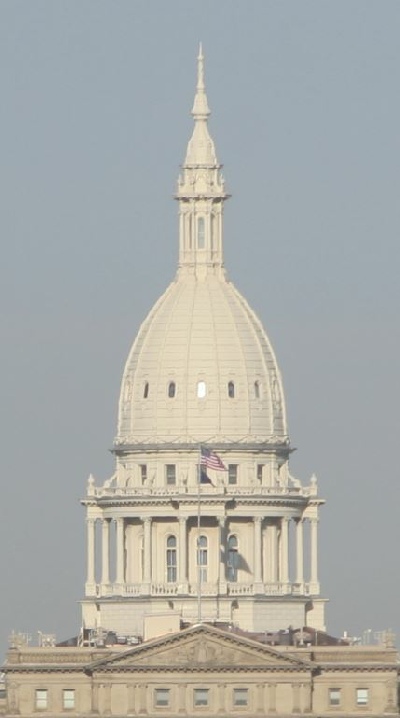
What I “SAW” in Lansing
There is a new Grant/Loan Program for Stormwater Asset Management & Wastewater (SAW Grants).
This program will provide up to $2 Million for Asset Management and Stormwater Planning. A 10% match is required for the first Million and a 25% match is required for the second Million. The match requirement is waived for "disadvantaged communities".
The Michigan Water Environment Association (MWEA) is a non-profit organization made up of professionals and practitioners who work to protect Michigan’s water environment. MWEA strives be a recognized authority on and advocate for Michigan's water resources. Its mission is to provide bold leadership, champion innovation, connect water professionals, and leverage knowledge to support clean and safe water.
MWEA, in no small way, is responsible for the SAW program coming into existence. I'll discuss how this program came about, then provide some updates on program implementation.
MWEA has had an "Affiliation" relationship with the Michigan Municipal League (MML) for decades. MWEA has co-sponsored an annual "legislative event" with the Michigan Section of the American Water Works Association (AWWA) since at least 2006 in cooperation with MML. MWEA initiated drafting legislation to address Stormwater Utility issues in cooperation with the South East Michigan Council of Governments (SEMCOG) in 2006. MWEA served on MML's Infrastructure Committee since at least 2007.
Creation of the SRF Advisory Committee
In 2010 the state brownfield cleanup program ran out of money. Supporters of the program discovered that most of the 2002 $1 Billion bond authorization (known as Prop 2) was not utilized and proposed using it to continue the brownfield program. This was opposed by the groups that worked to get Prop 2 passed by the voters of Michigan because that would not be a water pollution control purpose. SEMCOG is one of those groups. After negotiations a compromise was reached that would fund the brownfield program and lead to effective use of the remaining bond funds.
One of the resulting compromises is the extension of the S2 grant program with a second $40 Million to assist communities prepare complete applications for State Revolving Fund (SRF) loans. Currently about 3 ½ Million dollars remain. Another result was the creation of the "state water pollution control revolving fund advisory committee". MWEA was one of the organizations specified in the legislation to serve on the committee. This came about because of the cooperative work MWEA had been doing with SEMCOG and MML.
The legislation also specified that AWWA, Michigan Association of Counties (MAC), SEMCOG and Michigan Association of County Drain Commissioners (MACDC) appoint a member, and that MML appoint members representing cities, suburban municipalities, and rural municipalities. When members were appointed, MWEA appointed me, AWWA appointed Barb Marczak, MAC appointed Phil Sanzica, MACDC appointed Janice Bobrin, SEMCOG appointed Chuck Hersey, but MML had recently lost their environmental staff person. So MML requested assistance from MWEA in selecting volunteers for the committee, resulting in Ed Mahaney representing rural communities, Gary Burk representing suburban communities, and Tim Sikma representing cities. Other members were appointed by Clean Water Action, Nature Conservancy, Michigan Infrastructure and Transportation Association (MITA), American Council of Engineering Companies of Michigan, and the State Chamber of Commerce.
So of the 13 volunteer members, eight were members of MWEA. This would not have happened if MWEA had not worked on legislative issues with MML and SEMCOG. This success in releasing funding needed to establish sustainable wastewater and stormwater infrastructure demonstrates that it is important for MWEA members to get engaged in or to continue engagement in the political processes in the state. As a 501(c)(3) tax-exempt organization, MWEA may not support or endorse candidates for political office. But it may, and in my opinion must, be significantly engaged in the politics of water environment policy in Michigan.
SRF Advisory Committee Effectiveness
In 2010, $654 Million of the bonding authority remained. $200 Million was dedicated to the SRF program to help fund the projects spawned by the S2 grant program. So $450 Million is available to provide grants and loans.
The committee worked for a year to develop a detailed plan for use of these funds. The committee’s recommendations were included in Governor Snyder’s Infrastructure Message on October 26, 2011 and were introduced as bills in both the state house and senate in May 2012. The goal was to increase the level of investment in sewer infrastructure and other water quality improvements.
The bills, as introduced identically in both houses of the legislature, would create a grant program to incentivize up front activities that improve efficiency and reduce costs; create a State-operated loan program free of federal red tape for larger capital projects, while still maintaining a separate SRF program; and, fund the creation of stormwater utilities.
The bills followed the committee’s recommendations very well. Drafted by the Legislative Service Bureau at the request and direction of the Michigan Department of Environmental Quality (MDEQ).
During negotiations on the bills in legislative committees, the eligibility of stormwater utility creation was quietly deleted, provision for creation of a grant and loan program for Wetland Mitigation Banks was included, Funding for innovative projects was added, and half million dollar grant eligibility for construction added for disadvantaged communities.
The Chronology of a Report Becoming Law
September 13, 2011 Advisory Committee Final Report
October 26, 2011 Governor Snyder’s Infrastructure Message
March 6, 2012 MDEQ testifies at House Appropriations Subcommittee on Environmental Quality
May 24, 2012 House Bills introduced
May 31, 2012 Senate Bills introduced
September 11, 2012 House Natural Resources Committee Hearing
September 19, 2012 Senate Natural Resources, Environment and Great Lakes Committee Hearing
December 6, 2012 Senate Bills 1155-1158 passed by House
December 12, 2012 House Bill 5673 passed by Senate
Senate Bill 1155 House substitute concurred in by Senate
December 13, 2012 Senate substitute for 5673 concurred in by House
House substitute for 1156 concurred in by Senate
House substitute for 1157 concurred in by Senate
House substitute for 1158 concurred in by Senate
December 21, 2012 Senate Bill 1155 presented to Governor
Senate Bill 1157 presented to Governor
Senate Bill 1158 presented to Governor
December 27, 2012 HB 5673 presented to and approved by Governor, becomes PA511 of 2012
Senate Bill 1156 presented to Governor
January 2, 2013 Senate Bill 1155 approved by Governor, becomes PA559 of 2012
Senate Bill 1156 approved by Governor, becomes PA560 of 2012
Senate Bill 1157 approved by Governor, becomes PA561 of 2012
Senate Bill 1158 approved by Governor, becomes PA562 of 2012
Now these are all part of Act 451 of 1994, as amended.
The first $1 Million grant would require a 10% match and the second $1 Million grant would require a 25% match. The match requirement would be waived for “Disadvantaged Communities” or communities under Emergency Financial Management. Grants are to be repaid with interest within 3 years of grant award unless the grantee:
- proceeds with a construction project for wastewater or Non-Point Source planning,
- makes significant progress toward achieving the funding structure necessary to implement Asset Management planning, or
- develops a plan for implementing Stormwater Management project grants.
The department shall establish an application and review process for considering grant applications.
A grant may be used for 1 or more of the following purposes:
(i) Development of an asset management program for a sewage collection and treatment system or a storm water system. For sewage collection and treatment systems, the program shall include the development of a funding structure and implementation schedule that provides sufficient resources to implement the program. The municipality shall coordinate, as feasible, with other infrastructure activities in the same geographic area. In addition, a disadvantaged community may expend not more than $500,000.00 in grant funds to implement projects identified in the asset management program.
(ii) Development of management plans for the treatment of storm water.
(iii) Planning and design of a sewage treatment works project or stormwater treatment project as defined in section 5301(n) or (o) or planning and design of construction activities designed to reduce nonpoint source pollution.
(iv) Project costs of a municipality related to the testing and demonstration of innovative wastewater and storm water technologies approved by the department.
“Asset management program” means the program that identifies the desired level of service at the lowest life cycle cost for rehabilitating, repairing, or replacing the assets associated with a municipality’s wastewater or storm water system. The MDEQ is charged with determining what constitutes an acceptable Asset Management Program.
“Disadvantaged community” means a municipality in which all of the following conditions are met:
(i) Users within the area served by a proposed sewage treatment works project or stormwater treatment project are directly assessed for the costs of construction.
(ii) The median household income of the area served by a proposed sewage treatment works project or stormwater treatment project does not exceed 120% of the statewide median annual household income for Michigan.
(iii) The municipality demonstrates at least 1 of the following:
(A) More than 50% of the area served by a proposed sewage treatment works project or stormwater treatment project is identified as a poverty area by the United States bureau of census.
(B) The median annual household income of the area served by a proposed sewage treatment works project or stormwater treatment project is less than the most recently published federal poverty guidelines for a family of 4 in the 48 contiguous United States. In determining the median annual household income of the area served by the proposed sewage treatment works project or stormwater treatment project under this sub-subparagraph, the municipality shall utilize the most recently published statistics from the United States bureau of the census, updated to reflect current dollars, for the community which most closely approximates the area being served by the project.
(C) The median annual household income of the area served by a proposed sewage treatment works project or stormwater treatment project is less than the most recently published statewide median annual household income for this state, and annual user costs for sewage treatment or stormwater treatment exceed 1% of the median annual household income of the area served by the proposed sewage treatment works project or stormwater treatment project.
(D) The median annual household income of the area served by a proposed sewage treatment works project or stormwater treatment project is not greater than 120% of the statewide median annual household income for this state, and annual user costs for sewage treatment or stormwater treatment exceed 3% of the median annual household income of the area served by the proposed project.
Communities that claim “disadvantaged” status include certain financial information in their grant application, and MDEQ will conditionally determine the status. The final determination of disadvantaged status will not be known until actual bid costs are submitted.
SWQIF Loans - strategic water quality initiatives loan program
SWQIF currently provides loans for sanitary sewer lead improvements and for upgrading failing on-site septic systems.
Funding for the new loan program is being kept separate from the funding for the existing SWQIF program. The new SAW loan program would provide funding for:
(1) Project costs of the municipality related to testing, demonstration, and construction activities as defined in section 5301(d) for innovative wastewater and storm water technologies approved by the department. This does NOT cover research and development for private companies.
(2) Assistance for construction activities as defined in section 5301(d) designed to protect water quality, including improvements that are water or energy efficient, where feasible, when identified through an asset management program or a project identified in an approved storm water management plan.
5301(d) “Construction activities” means any actions undertaken in the planning, designing, or building of sewage treatment works projects, stormwater treatment projects, or nonpoint source projects. Construction activities include, but are not limited to, all of the following:
(i) Project planning services.
(ii) Engineering services.
(iii) Legal services.
(iv) Financial services.
(v) Design of plans and specifications.
(vi) Acquisition of land or structural components, or both.
(vii) Building, erection, alteration, remodeling, or extension of a sewage treatment works.
(viii) Building, erection, alteration, remodeling, or extension of projects designed to control nonpoint source pollution, consistent with section 319 of title III of the federal water pollution control act, 33 USC 1329.
(ix) Building, erection, alteration, or remodeling of a stormwater treatment project.
(x) Municipal supervision of the project activities described in subparagraphs (i) to (ix).
Grant and loan program for Wetland Mitigation Banks
The grant program covers up to 90% of the cost to prepare a loan application, which includes development of the Banking Proposal, notification of adjacent property owners, resolution of objections, and design of the bank. The loan program would cover engineering, DEQ Banking Agreement, land purchase, bank construction, monitoring, and maintenance. Up to $500,000 would be available for grants under the program while $10 Million would be available for grants and loans state-wide. Funds would be from the Strategic Water Quality Initiatives Fund.
Miscellaneous Questions
When will applications be available?
Application for grants and loans are to be made on a form approved by the department. The form is under development now and is expected to be available by October 1st. Applications will not be accepted until December 2, when funding is expected to be available for award. The funding bills have cleared the legislature.
Can force account work be credited towards the match requirement?
Yes, but fringes will be limited to 40% of salary.
Where can I get all the details I need for completing the grant application?
MDEQ will be sponsoring training sessions, probably in September, in the U.P., Upper Lower Michigan, and Grand Rapids
SEMCOG will be sponsoring 2 training sessions in the Detroit area
One of the training sessions may be recorded for access via the web
When loans are repaid, where does the money go?
Loan repayments go to the strategic water quality initiatives fund (SWQIF). MDEQ is administratively keeping the traditional SWQIF funding separate from the SAW funding.
Will the grant applications use the same priority system used by the SRF program?
No, grant and loans will be made on a first-come first-served basis.
Where can I get current information on the SAW program?
www.michigan.gov/cleanwaterrevolvingfund
SWQIF Grants - strategic water quality initiatives grant program
The grant program was created within the Strategic Water Quality Initiatives Fund program (SWQIF). SWQIF currently provides loans for sanitary sewer lead improvements and for upgrading failing on-site septic systems. The grant program is to increase local investment in wastewater and stormwater infrastructure by providing up to $2 Million to local governments
(1) to develop Asset Management Programs,
(2) to develop Management Plans for treatment of stormwater,
(3) to plan and design sewage treatment or stormwater treatment projects (excludes stormwater conveyance),
(4) to construct systems designed to reduce non-point sources of pollution, and
(5) to plan and design innovative systems.
November 21, 2014
The 2014 elections are behind us, and none-to-soon so far as I’m concerned. The political ads were driving me crazy. None of them indicated anything about what issues were important to any of the candidates or what the candidate would do if elected. At any rate, I was curious about FACTS. I got the raw election numbers from the Republican Secretary of State, Ruth Johnson’s website and cranked out the math.
There were over 3 million votes cast for the state house state-wide. 1,464,983 of them or 48.52% were for Republicans and 1,536,711 of them or 50.89% were for Democrats. So one would think, if this were a democracy, that a little over 50% of the representatives would be Democratic. But no; only 47 of the 110 representatives or 42.73% are Democrats. 63 or 57.27% are Republicans.
In the state senate race, 1,528,343 votes were for Republicans or 50.36%. 1.483,938 votes were for Democrats or 48.90%. So one would think that the senate would be pretty evenly divided. But no; only 11 of the 38 senators are Democratic or 28.95% and 27 are Republicans or 71.05%.
There is only one word that can explain this disparity: GERRYMANDERING.
In the process of setting electoral districts, gerrymandering is a practice that attempts to establish a political advantage for a particular party or group by manipulating district boundaries to create partisan advantaged districts.
I would like to see a constitutional amendment that requires all legislative districts to be rectangles. This is a simple method that would make gerrymandering almost impossible.